Building Africa's Infrastructure Intelligence Layer
Year One
On convergence, sovereignty, and the missing piece in a hundred-billion-dollar puzzle.
April 2026
Africa loses more capital than it receives. That is not a metaphor. By multiple credible estimates—the Political Economy Research Institute, Global Financial Integrity, UNCTAD—the continent is a net creditor to the rest of the world. More money flows out through profit repatriation, capital flight, and debt service than flows in through aid and foreign investment combined. This has been true for decades. It will remain true until we build the infrastructure to change it.
I did not start with that insight. I arrived at it over eighteen years, one failure of imagination at a time. What follows is a reflection on that journey: how it led to AfCEN, what we built in our first year, and what I believe comes next.
Proximity
I began selling solar lanterns in Kenya. Then I helped establish the Kenya Climate Innovation Center to support clean technology entrepreneurs. Both mattered. Neither scratched the surface of scale.
So I co-founded responsAbility Renewable Energy Holding—rAREH, now Serengeti Energy—with responsAbility Investments AG as their first dedicated energy fund for Africa, backed by KfW, Norfund, and the Nordic Development Fund. The thesis was straightforward: create a vehicle for institutional capital to reach small and medium-scale renewable energy projects across sub-Saharan Africa.
We discovered almost immediately that there were no bankable projects to invest in. The pipeline everyone assumed existed was a collection of feasibility studies in various stages of incompleteness, scattered across ministries and donor filing cabinets. So we became developers ourselves—building Nkhotakota Solar in Malawi, hydroelectric plants in Uganda, projects that are now generating power under the Serengeti Energy name.
I learned two things in that period that I carry with me daily.
First: only development finance institutions could invest. The illiquidity and ticket sizes of African infrastructure locked out everyone else—local pension funds, diaspora investors, family offices. This has a consequence that is rarely discussed with the honesty it deserves. The returns on African infrastructure investment flow overwhelmingly to investor countries. The profits go to European pension funds. The political risk insurance premiums go to MIGA and the private insurers. The construction contracts often go to firms from the investing country. What remains on the continent is the asset and the jobs—both essential, but not sufficient to build the compounding wealth base that transforms an economy over generations.
I want to be careful here. I have spent my career working with DFIs. AfCEN serves them today. Foreign institutional capital is not the problem; its structural solitude is. Unless Africans also invest in their own infrastructure, the continent will never build retained earnings at the scale where genuine economic sovereignty begins. That conviction—that African ownership of African infrastructure is not optional but existential—runs through everything we are building.
The second thing I learned was about friction. Every project took years longer than it should have. Not because the engineering was hard or the demand wasn’t there, but because the connective tissue between projects, data, and capital did not exist. No system could tell an investor which projects in which countries at which stage were worth backing. No mechanism matched capital to opportunities at speed. The intelligence layer was missing, and everyone worked around its absence without naming it.
The Breaking Point
I joined the Rockefeller Foundation and helped launch the Global Energy Alliance for People and Planet—GEAPP—a $1.5 billion initiative funded by the Rockefeller Foundation, IKEA Foundation, and the Bezos Earth Fund to accelerate clean energy transitions in developing economies. The thesis: philanthropic capital at unprecedented scale, deployed strategically, could unblock the friction that held back private investment. It did, in places. Concessional finance de-risked projects. Technical assistance improved preparation. Political will was mobilized.
At President William Ruto’s request, I served as CEO of the inaugural Africa Climate Summit in Nairobi—an event that generated $26 billion in commitments for Africa’s climate and energy transition. Twenty-six billion dollars. On paper, transformational. In practice, those commitments face the same friction every pledge faces: the pipeline is not ready, the data is incomplete, and the connective tissue between pledged capital and bankable projects does not exist.
I then served as Special Envoy for Mission 300—the joint African Development Bank and World Bank initiative to connect 300 million Africans to electricity by 2030, launched with over $50 billion in commitments. In that role, I helped lead the design of country energy compacts and the negotiations that produced the declaration subsequently adopted by the African Union.
One and a half billion. Twenty-six billion. Fifty billion. And yet, watching the trajectory from both vantage points, I could see it would not keep pace. The money was committed. The market demand was real. The political alignment was there. But the pipeline was not moving fast enough. The same projects circulated through the same channels, hitting the same preparation bottlenecks, facing the same information gaps.
That was the breaking point. What was missing was not another fund, another alliance, or another billion-dollar commitment. What was missing was intelligence—a permanent, technology-driven layer that could connect projects, data, and capital across the continent at the speed the moment demanded. Philanthropy could catalyse. It could not solve a structural information deficit. And an organisation dependent on grant cycles could not build permanent infrastructure.
In April 2025, I incorporated AfCEN in Nairobi.
The discipline is not in narrowing the lens. It is in building the architecture that holds the full complexity. Africa’s infrastructure is one system. The intelligence has to match.
Convergence
We started in energy and climate. It is what I am known for—the Africa Climate Summit, GEAPP, rAREH. The initial platform focused on energy project pipelines, minigrids, electrification planning.
Then the work itself intervened.
We were building a compliance tool to help European importers of African aluminium navigate the EU’s Carbon Border Adjustment Mechanism. To calculate embedded emissions, we needed minerals extraction data. To contextualise the minerals data, we needed trade corridor mapping. To make the corridor intelligence meaningful, we needed agricultural and industrial demand forecasting along those routes. Every tool we built demanded the existence of tools we hadn’t built yet.
This was not a product management problem. It was an analytical truth about how African infrastructure works. Energy, minerals, transport, agriculture, digital infrastructure, trade—these are not separate sectors that happen to coexist on the same continent. They are one interconnected system. A transmission line enables a mine enables an export corridor enables agricultural processing enables the tax base that funds the next transmission line. Analyse any one in isolation and you get the wrong answer.
I know the instinct this provokes. Focus. Choose a lane. But this has been tried. Sector-specific intelligence platforms exist. Regional analytics tools exist. They produce the same fragmented picture that created the problem. Electricity trade is inherently cross-continental—power pools span dozens of countries. Mining policy requires continental coordination to generate the negotiating leverage that no individual nation can achieve alone. The discipline is not in narrowing the lens. It is in building the architecture that holds the full complexity.
This is how we arrived at convergence—not as positioning, but as a discovery forced on us by the work. We rebuilt the platform from the ground up. The AfCEN Neural Network is designed so that every intelligence module draws on every other. A query about a transmission corridor surfaces the regulatory environment, the minerals deposits along the route, the agricultural demand it would unlock, and the compliance implications for international investors. That interconnection is the product.
AfCEN is now Africa’s infrastructure intelligence layer, spanning energy, transport, minerals, digital infrastructure, water, and critical minerals across all 55 African Union member states. The name says climate and energy. The capability says infrastructure. We are growing into the name we should probably have chosen from the start.
What We Built
KoBold Metals, backed by Bill Gates, Jeff Bezos, and Andreessen Horowitz, recently raised $537 million at a $3 billion valuation. Their model is to use artificial intelligence to discover mineral deposits, then own an interest in the resources extracted. KoBold is now the largest American investor in Zambia, developing what may be the country’s highest-grade copper discovery in a century. It is a remarkable company, and its valuation reflects the scale of the opportunity that AI brings to the critical minerals sector.
But KoBold serves one side of the market: exploration and extraction. The other side—the governments, regulators, and multilateral institutions that manage mineral concessions, negotiate terms, set policy, and oversee compliance across the world’s most mineral-rich continent—is a larger addressable market, and it is almost entirely unserved by modern intelligence tools. Fifty-five governments making consequential decisions about their most strategic natural assets, largely without the AI-powered intelligence that the companies sitting across the table from them already deploy.
MineralIQ serves that market. It gives African governments and the African Union the intelligence to understand what they have, where it is, who holds concessions, and what the strategic implications are—across all AU member states. In a geopolitical moment where nations are asserting sovereignty over their own geological data and the United States and China are in open confrontation over critical mineral supply chains, this is not a niche. It is the platform layer underneath the entire critical minerals economy. The same investors who see the value in KoBold’s approach should recognise the complementary opportunity in equipping the institutional side of the same market.
• • •
Europe’s regulatory architecture is reshaping trade with Africa in real time. CBAM, the Corporate Sustainability Due Diligence Directive, the EU Deforestation Regulation, the Critical Minerals Regulation, the EU Battery Regulation—each creates new compliance obligations for European importers and new exposure risks for African exporters. We built a compliance intelligence suite that serves both sides. It is live, in production, and it carries a quality that most of our work does not yet have: regulatory deadlines create recurring demand that does not depend on institutional procurement timelines.
• • •
At the request of President Julius Maada Bio, Chair of ECOWAS, AfCEN was appointed alongside PI-CREF—led by Dr. Kandeh K. Yumkella, the former United Nations Under-Secretary-General and UNIDO Director-General—to serve as the Executive Secretariat for the West Africa Integration and Investment Summit, a heads-of-state convening in Freetown this October bringing together energy, strategic minerals, digital infrastructure, trade, and investment across the ECOWAS region.
This is not advisory work. We are building and operating the intelligence infrastructure that will inform investment decisions at the highest level of government. Energy, minerals, digital, trade—converging in a single analytical architecture. If convergence is a theory, this is the experiment.
• • •
Last year we launched the CHAI Pan-African Hackathon—an eight-week programme that produced thirty winners across six teams, with solutions spanning energy efficiency, agricultural intelligence, circular economy platforms, and financial inclusion. This year, winning teams will travel to Rome, San Francisco, and Geneva to connect with global innovation ecosystems. The deeper point is not the programme itself. It is a conviction that the solutions to Africa’s infrastructure challenges will be designed by Africans who understand the context from the inside—and that our role is to create the platforms, the pathways, and the professional opportunities that allow that talent to build at scale.
Who Trusts Us and Why It Matters
We are a contracted partner within Google X, the moonshot factory, working alongside Shell Foundation on hyperlocal data for Africa. We entered this partnership deliberately, with a principle that guides all our technology relationships: global partnerships should bring capability to the continent without extracting its data. The hyperlocal intelligence we help generate remains within an African-governed framework. That is not a negotiating position. It is a design requirement.
With the UNDP AI Hub, we are co-designing the pipeline architecture for the African Development Bank’s $10 billion AI Fund. That sentence is worth reading slowly. We are not only building the intelligence infrastructure that identifies and prepares investment opportunities; we are helping to architect the capital deployment mechanism that will invest in them. The pipeline and the capital, connected through the same platform.
We are in discussions with the European Investment Bank on road investment corridors, including the Cameroon corridor. ENABEL is a partner. The Children’s Investment Fund Foundation, with whom we share a history going back to the second Africa Climate Summit, remains a valued counterpart. FSD Africa backed our earliest steps. We hold a memorandum of understanding with the V20 Group of Finance Ministers—the 68-nation coalition of climate-vulnerable economies—and work with the Africa-Europe Foundation, co-founded by Mo Ibrahim. We are engaged with the Coalition of Finance Ministers for Climate Action and are running pilots with Ministries of Finance in Uganda and Congo-Brazzaville.
At the continental level, our memorandum of understanding with AUDA-NEPAD—the development agency of the African Union—covers energy, SMEs, and minerals intelligence across AU member states. That framework gives us a foundation that very few organisations at our stage can claim, and the responsibility that comes with it is one we carry carefully.
I want to be honest about the nature of these relationships. They are extraordinary for a company twelve months old. They are also, by nature, long-dated. Development banks, multilateral agencies, and government ministries do not adopt new technology partners quickly, and they should not. We are a new entrant with compelling technology, operating in spaces where trust accrues slowly and rightly so. The quality of our counterparts tells you the thesis is sound. The pace of institutional adoption tells you we are building for the long term.
Ownership
I keep returning to a structural problem that predates AfCEN and will outlast it if we do not address it deliberately.
When I built rAREH, I saw that only DFIs could invest in African infrastructure. Everyone else was locked out by illiquidity and ticket sizes. This meant that African infrastructure was built almost entirely with foreign capital—capital that, by design, repatriates its returns. The profits go home. The insurance premiums go home. The contractor revenues go home. The foreign exchange risk stays.
This is not a critique of foreign investors. It is a description of the physics of capital. Money goes where the instruments allow it to go. And the instruments have been designed exclusively for institutional scale and institutional liquidity. A Kenyan engineer cannot invest in a Kenyan transmission line. A Nigerian diaspora professional in London cannot participate in the infrastructure of the country she sends remittances to. A South African pension fund faces regulatory and structural barriers to backing domestic infrastructure at the scale its balance sheet could support.
The result is a continent that builds infrastructure it does not own economically—and therefore does not accumulate the retained earnings that compound into sovereignty over time. This is the deeper problem beneath the headline investment gap. It is not that capital is insufficient. It is that the architecture of capital excludes the people who would benefit most from participating.
This is why tokenisation is not a peripheral initiative for us. We are designing instruments that make African infrastructure investable at price points and liquidity profiles that unlock participation from African investors and the global diaspora. Our first use case is a transmission line in Uganda. The technology is proven. The regulatory pathway is clear. The demand—particularly from the diaspora—is real and, frankly, has surprised us with its intensity.
The vision is that African infrastructure is financed by a combination of institutional capital for scale and African-owned capital for sovereignty. Not one or the other. Both. And the intelligence layer that AfCEN provides becomes the connective tissue that allows both sources to find, evaluate, and invest in the same pipeline with the same confidence.
What I Have Learned About Building
We went from a founder to ten professionals across three continents in twelve months. The hardest part has not been the technology or the partnerships. It has been finding people who can hold two worlds simultaneously—a ministerial briefing in Freetown in the morning and a production deployment in the afternoon—because this company requires both, every day, from almost everyone. That profile is rarer than any technical skill. When you find it, you hold on.
What Comes Next
The technology is built. The partnerships are in place. The institutional relationships are real. The platform is live and in production.
What comes next is deployment—putting intelligence tools into the hands of the governments, development banks, and private sector partners who have already told us they need them. The AUDA-NEPAD partnership gives us a continent-wide foundation. The compliance suite gives us a near-term revenue base. The institutional relationships give us credibility. What remains is the capital to move from proof of concept to permanent infrastructure—the kind that becomes part of how institutions make decisions, not an experiment they evaluate.
Every corridor assessed, every compliance calculation processed, every minerals concession mapped adds to an intelligence base that grows more valuable with use—and that could not be assembled without the institutional relationships and continental reach we have spent this year building. That accumulation is the business. It is also the contribution.
I am, if I am honest, overwhelmed by the scope of what we are attempting. The number of fronts, the complexity of the partnerships, the ambition of building a continental intelligence layer in twelve months from a standing start. There are days when the weight of it is considerable.
But consider the alternative. Right now, major technology companies are investing billions of dollars and years of engineering effort into building data centres in space and exploring lunar infrastructure—while Africa, which holds the energy resources, the critical minerals, the land, and the youngest workforce on earth, struggles to attract a fraction of that capital for projects on the ground. That is not because African infrastructure is inherently riskier than space. It is because the intelligence infrastructure needed to accurately assess risk and return on the continent does not yet exist. When investors cannot compare opportunities clearly, capital flows to what feels familiar—even if familiar means extraterrestrial. The mispricing of African infrastructure is the largest capital allocation failure in the global economy. We are building the platform that corrects it.
I have never been more convinced that we are on the right track. The convergence is real—not as a concept, but as a structural feature of how infrastructure systems work, in Africa and increasingly everywhere. The demand for intelligence is real—from governments, from investors, from institutions that have been making decisions with incomplete information for too long. And the window is real—a moment of geopolitical realignment around critical minerals, energy transition, and AI where the leverage has never been greater and the cost of inaction has never been higher.
This is not only an African story. The intelligence deficit we are addressing—fragmented data, siloed analysis, misunderstood risk—exists wherever infrastructure investment meets complexity. We are building where the problem is most acute, but the architecture we are creating has implications well beyond any single continent.
Africa’s infrastructure century is here. The question is whether we build the intelligence to match the ambition.
We are building.
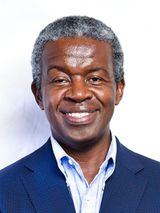
Joseph Nganga
CEO & Founder, Africa Climate and Energy Nexus