The Compute Purchase Agreement: The Contract Beneath the Intelligence Age
Why the defining instrument of AI infrastructure finance won't be written in Virginia or Silicon Valley — and why the future belongs to whoever can price power, compute, sovereignty and development as one asset
In September 2023, Nairobi hosted the Africa Climate Summit — I served as its CEO — and Kenya made a case to the world that I still believe: if the twenty-first century runs on clean electrons, then a country whose grid is already more than ninety percent renewable, with Africa's largest geothermal field under its Rift Valley, is where the world's most power-hungry industry should come to build. "Why Kenya, why now" was Ambassador Meg Whitman's pitch, and it travelled — versions of it carried into American boardrooms. That same season, the first geothermal-powered data-centre concept was launched at Olkaria.
Eight months later came the crown jewel. Microsoft and G42 announced a plan for a $1 billion geothermal-powered data-centre campus at KenGen's Green Energy Park, with ambitions stretching toward a full gigawatt of capacity and an Azure cloud region for East Africa — the largest digital-infrastructure investment in the continent's history, powered almost entirely by clean energy. A perfect climate story. I say that as one of the people who helped tell it.
Then, this May, it stalled. President Ruto was blunt about the full build — a gigawatt is roughly a third of Kenya's grid, and switching on that one campus would mean, in his words, shutting off power for half the country. He was right, at that scale. But phase one was about 100 megawatts, entirely feasible on Kenyan geothermal — some of the best firm, clean, dispatchable power anywhere on earth. Power alone does not explain a suspension.
What actually stalled the deal, according to reporting first carried by Bloomberg in May 2026, was risk allocation. Microsoft and G42 asked the Government of Kenya to underwrite both legs of the project at once: guaranteed annual payments for a defined volume of compute — a minimum revenue floor, owed whether or not the capacity was used — and the full power load itself, through state plants and long-term purchase agreements. The Treasury declined. And here I will say something that may sound strange coming from someone who wants this facility built: the Treasury was right. Kenyans are still paying, in their power bills, for a generation of take-or-pay contracts signed in the last infrastructure wave. No finance ministry managing a careful fiscal consolidation should carry a dollar-denominated guarantee of that size for demand nobody had yet aggregated. Kenya's ICT Principal Secretary maintains the project "is not failed or withdrawn" — that it "still requires some structuring." He is exactly right. And the structure it requires is not electrical.
Kenya had the power for a serious first phase. Kenya had a willing hyperscaler. Kenya had — has — the best clean-compute story on earth. What the deal lacked was a contract that didn't ask one treasury to carry the whole market's risk.
(The site raises real diligence questions of its own — cooling draws on a Lake Naivasha basin with many competing users, and producing geothermal fields come with induced micro-seismicity that must be monitored. Real factors, engineerable ones — the project's own designers plan rainwater harvesting for good reason — and exactly the kind of thing serious underwriting prices. Notably, none of them appear in the reporting on why the deal stalled.)
I keep coming back to this case because I lived both halves of it: the climate story that made the deal imaginable, and the financing gap that stalled it. The lesson is not that the story was wrong — the electrons are as clean and as real as we said they were. The lesson, as I have argued before, is that the bottleneck in African infrastructure isn't capital, and it isn't the story either. Global capital is queueing for AI infrastructure at a scale finance has rarely seen — hyperscaler capital expenditure is expected to reach roughly $700 billion in 2026 alone, nearly double the year before. Nor is the capital only foreign. Dr. James Mwangi — who built Equity into one of Africa's great financial institutions and was this month named the continent's first Digital Public Infrastructure Champion — makes the point bluntly: Africa does not have a capital problem; its pension funds, sovereign wealth funds and development finance institutions collectively manage trillions. What it lacks are structures that capital can be deployed into. His own Africa Recovery and Resilience Plan shows what such a structure looks like: six billion dollars committed from Equity's balance sheet, designed to crowd in four times as much from development and institutional partners — a thirty-billion-dollar financing umbrella for viable projects. Viable is the operative word; it is doing all the work in that sentence. Hold the shape of that structure in mind — an anchor commitment that de-risks everything built above it. We will meet it again. The bottleneck is the thing that lets capital land.
But the deepest lesson of the stalled gigawatt is not about money at all. Look again at how it died: the Treasury saw contingent liability, the hyperscaler saw demand risk, the utility saw load risk, the chip supply pointed elsewhere — everyone was right, in their own lane, and the deal fell into the gap between the lanes. That is not a Kenyan failure; it is the signature failure of this era. The defining assets of the twenty-first century are convergence assets — a data centre is an energy asset, a compute asset, a sovereignty asset and a development asset at once — and the world's institutions are still built to underwrite one lane at a time.
I have spent my career at those junctions, mostly without the luxury of calling them that. I have distributed solar lanterns village by village, and co-founded a company — responsAbility Renewable Energy Holding — that grew to $121 million building, owning and operating power plants across sub-Saharan Africa. I helped stand up the Kenya Climate Innovation Centre. I directed Power & Climate for Africa at The Rockefeller Foundation, then served as Vice-President for Africa of the alliance it founded with the IKEA Foundation and the Bezos Earth Fund. I ran the Africa Climate Summit and carried the Mission 300 envoy mandate. Every altitude — the household, the power plant, the innovation ecosystem, the capital provider, the sovereign convening — taught the same lesson: the constraint is never the technology. It is the structure that makes demand bankable. The argument of this essay is that in the AI era those altitudes are no longer separable — and that whoever learns to price them as one asset will own the decade.
Lenders don't finance buildings. They finance contracts.
In March 2026, CoreWeave closed an $8.5 billion GPU-backed credit facility rated A3 by Moody's — the first GPU-backed loan ever to reach investment grade. It is worth being precise about what got rated. Not the GPUs: they depreciate faster than almost any asset a bank has ever lent against. What reached investment grade was the contract — years of committed offtake from creditworthy counterparties. Obinna Isiadinso put the principle sharply in Global Data Center Hub: in AI infrastructure the offtake agreement is the asset — lenders model the counterparty's balance sheet, not the building. He ends by asking the question this essay sets out to answer: what happens when the offtake counterparty is not a single hyperscaler but a sovereign, and the market is not one balance sheet but many, fragmented across borders.
This is not a new idea. It is the oldest rule in infrastructure finance, transplanted. Independent power became privately financeable the day the Power Purchase Agreement standardised offtake — because project finance never underwrites steel and concrete; it underwrites three variables: contract duration, counterparty creditworthiness, and pricing terms. AI data centres are now being financed exactly the same way.
The implication for Africa is uncomfortable and clarifying at once. Our AI-infrastructure conversation is obsessed with the wrong nouns — megawatts, GPUs, land. All real. All secondary. In AI infrastructure, the offtake agreement is the asset, and Africa's missing layer is the machinery that produces bankable offtake.
And here is the part the global industry has not yet priced. Single-balance-sheet offtake — one hyperscaler standing behind one campus — describes perhaps a dozen companies on earth. Everywhere else that AI demand is real but institutionally fragmented — most of Asia, Latin America, the smaller Gulf and European markets, and yes, Africa — the same machinery is missing. This is not an African gap the world should pity. It is a global gap Africa happens to face first, and hardest — which is exactly why the solution will be built here.
Three ledgers of demand — and only one of them finances
When people size Africa's AI opportunity, they usually quote the top ledger. Projections of AI's contribution to African GDP run from $1 trillion to nearly $3 trillion by the early 2030s. The most rigorous of these — the African Development Bank's analysis of AI's productivity gain — is careful to say what its headline number is: a full-activation scenario, what becomes possible if adoption, affordability and infrastructure all converge. The Bank is right to size the prize, and right about the condition. But a scenario is a direction of travel, not a bankable cash flow — no credit committee can lend against it.
The middle ledger — demand that can actually be paid for today — is far smaller. Industry estimates put the realised African AI market at around $4.5 billion, and cumulative venture funding for African AI startups over five years at roughly $800 million: less than a single large US funding round.
The bottom ledger — demand that is contracted, with a creditworthy counterparty, on terms a lender can model — is close to empty. Operators across the continent disclose megawatts and capex; almost none disclose utilisation or AI revenue. Outside South Africa, only about a third of the continent's built data-centre capacity is even live. South Africa is the exception that proves the rule: it runs supply-tight, with colocation space nearly full, precisely because it has a deep base of paying customers.
This is Africa's demand paradox: we are undersupplied on capacity and under-contracted on demand at the same time — at different layers, in different geographies. And it reframes the debate. The question is not "does Africa need more data centres?" It plainly does. The question is what makes the next tranche of them financeable — and the answer is not potential. It is contracts. You underwrite the contracted ledger and narrate the latent one. Never the reverse.
One more inconvenient number sharpens the picture. By GSMA's count, roughly 98% of African AI use cases today are predictive — fraud scoring, crop analytics, health triage — not generative. Predictive AI runs on modest infrastructure. Much of the demand that is real does not need gigawatt frontier campuses; it needs right-sized, sovereign, inference-grade capacity close to its market. Which is exactly where the bankable story begins.
Where bankable demand actually lives
Inference — the work of serving live answers to real users — is now roughly two-thirds of all AI compute, and unlike model training, it cannot chase cheap power around the planet. Inference is pulled toward its market by physics (latency) and, increasingly, by law. Yet today roughly six of every ten of the most-consumed content services in Africa are still served from outside the continent.
Here is the careful version of the legal point, because the easy version — "Africa mandates data localization" — is wrong. Some forty-four African countries now have data-protection laws, but most are transfer rules in the European style, not localization regimes. The binding lever is narrower and stronger: sectoral. Central banks that bar offshore processing of core financial and identity data and enforce it through the banking licence itself. Governments classifying sovereign workloads. Sovereign-ID and health-data regimes that hard-default to in-country processing.
That regulated triad — financial, government, sovereign-ID and health — is the one slice of African inference demand with all three properties a financier needs at once:
- A legal forcing function. This demand cannot use the offshore escape valve. It must be served where the data sits.
- An institutional, creditworthy payer. Regulated banks, telcos and the state — not consumers priced in dollars against devaluing currencies.
- A latency and sovereignty pull that makes on-continent serving better, not just compliant.
And notice what the triad actually is: banking, identity, public services, health — the systems through which development happens. This demand is not adjacent to Africa's development agenda; it is the development agenda, expressed as regulated, creditworthy workloads. The convergence is not a metaphor. It is the cash flow.
Sized honestly, this wedge amounts to single-digit gigawatts and on the order of $20–50 billion of investable projects by 2030. Modest against the 40–130 gigawatt "parity" ceilings in the projections — but 50 to 150 times the continent's entire installed AI-compute base today. And unlike the trillions, it can be put under contract.
The instrument that doesn't exist yet
So why hasn't it been? Because the offtake instrument for compute has not been invented for this market. In the global deals, "offtake" simply means one hyperscaler's balance sheet standing behind one facility. Africa's regulated demand is real but fragmented — spread across hundreds of institutions and dozens of jurisdictions, none large enough alone to anchor a facility, which is why Microsoft ended up asking a single treasury to become the synthetic anchor tenant. That is the structural dead end.
Other sectors have solved harder versions of this problem. Power did it with the PPA. Global health did it with the Advance Market Commitment: when no single buyer could justify vaccine production for developing markets, donors pooled advance purchase commitments into one contract large enough to build factories against. That structure has never been applied to compute offtake. It is open white space.
Financial instruments are invented where constraints bind hardest, and then they travel to the core. Mobile money was born in Nairobi, not New York, because Kenya needed it first; it now moves value on every continent. The compute offtake instrument will follow the same path — written at the frontier, adopted wherever demand outgrows any single balance sheet.
The instrument I believe this market needs is a Compute Purchase Agreement — and the echo of the PPA is deliberate. I spent years of my career on the other side of that echo, building power plants whose financing lived or died on the strength of a purchase agreement, so I do not use the term lightly. Pool the regulated-inference demand across banks, ministries, telcos and digital-public-infrastructure operators — and across borders — into a single contracted, regulation-anchored, institutionally-paid offtake book. Three things follow:
- No single sovereign signs a take-or-pay alone. The clause that stalled the Kenya deal disappears; the state becomes one participant in a pooled book rather than the guarantor of last resort.
- The pooled book is the anchor tenant. What could not be found in one country's enterprise market becomes assemble-able across institutions and borders — which is why regional corridors, not single-country islands, are the right unit of design. This is not abstract for me: as chief operating officer of the 2026 West Africa Integration and Investment Summit, I spend my days assembling exactly that — fifteen countries' worth of investment pipeline at corridor scale.
- Risk gets structured off the host balance sheet. Concessional and first-loss capital — the kind development finance exists to deploy, and which I spent years deploying from inside The Rockefeller Foundation and GEAPP — absorbs the occupancy-ramp risk no fiscally prudent treasury should carry alone, converting a guarantee a government could never sign into a layered structure it can.
For that book to be underwriteable, someone must also be able to measure what stands behind it: the firmness of the power (Africa's genuine edge is dispatchable geothermal and hydro, as well as solar with batteries — AI runs at ninety-percent load factors), time-to-power, cooling economics and water rights (Kenya's highlands deliver cooling efficiency among the best in EMEA), network route diversity, the strength of each residency mandate, and the share of each market's demand currently leaking offshore. That measurement layer — a bankability index for African compute-and-power — is what turns a pooled contract into an investable one.
None of this is a critique of any single actor. The hyperscalers need contracted demand; the treasuries need fiscal discipline; both were behaving rationally inside a market with a missing instrument. Build the instrument, and the country whose "no" proved it was needed — with the strongest clean-firm-power story on the continent — moves from cautionary tale to first mover.
What the energy transition already taught us
Africa's electrification did not arrive as one continental super-grid, and it never will. It is arriving distributed: national grids where they reach, mini-grids where they don't, rooftop and off-grid solar in the last mile — each sized to the demand in front of it. That was not a compromise. It was the correct engineering answer to a continent whose demand is itself distributed. Africa's AI infrastructure must mirror that geometry: a mesh of right-sized, sovereign, inference-grade capacity — regional corridors, national nodes, edge deployments — rather than a single gigawatt monument as the only definition of ambition. The workloads agree: remember that 98% figure. Fraud scoring in Lagos and crop analytics in Lusaka do not need a frontier campus; they need dependable intelligence close to the problem.
And if distributed geometry sounds like a poor continent's consolation prize, consider what just happened in the richest housing market on earth. In May, Nvidia and PulteGroup — America's third-largest homebuilder — began piloting fractional data centres mounted on newly built suburban homes: liquid-cooled GPU nodes on exterior walls, thousands of houses aggregating into one virtual data centre, with a long-term vision of more than a gigawatt of distributed capacity. Note the number: the same gigawatt Kenya was asked to guarantee as a single campus. In Britain, servers installed in homes already heat household water. The Global North — running short of land, grid interconnections and patience for the monument model — is discovering distribution from abundance. Africa will master it from necessity, and necessity is the better designer: not spare electrical capacity monetised as an afterthought, but a sovereign mesh designed end-to-end — right-sized nodes, aggregated demand, and the financing instrument underneath. It is mobile money's story again. The model gets perfected where it is essential, then adopted where it is merely convenient. Designed in Africa; deployed everywhere.
The energy-access movement learned a second lesson, more slowly and more expensively: connection is not consumption. You can electrify a village and find the grid unpaid for — a connection without an appliance, an irrigation pump, a cold chain generates no revenue and services no debt. The sector's answer was deliberate demand stimulation: productive-use programmes that grew the load until the infrastructure could pay for itself. Compute is at exactly that juncture. Aggregating today's regulated demand into a Compute Purchase Agreement is half the job. The other half is growing tomorrow's book — deliberately.
At AfCEN this is not theory; we run it as operating platforms. We are deliberately a strange company — gigawatt bankability analysis on one floor, WhatsApp hackathons on the other — because the strangeness is the design: convergence, institutionalised. NextGen lets African builders launch AI-powered ventures on shared sovereign data infrastructure, through the channels their customers already use — WhatsApp, USSD — so a founder in Kumasi or Kisumu does not have to raise millions for data and infrastructure before serving a first customer. AfCEN Deploy puts AI-run operations underneath small and mid-sized businesses, so that a firm of five can operate with the systems of a firm of five hundred. The design point is the economics: because the heavy layer is shared, ventures stay local, stay lean — and therefore stay profitable and financeable. And every venture launched this way is also something else: new, metered, payable compute demand. Demand stimulation on one side of the ledger; the offtake book compounding on the other.
The same machine runs at regional scale. At WAIIS, AfCEN operates the technical working groups across the summit's four pillars — energy and industrialisation, strategic minerals, agriculture and digital transformation — the rooms where fifteen countries' ministries, utilities, banks and operators surface what they actually need to buy, build and finance, and where four supposedly separate sectors discover they are one corridor. One outcome shows where this leads: the Digital Embassy, championed by Sierra Leone's Minister of Communication, Technology and Innovation, Salima Monorma Bah — sovereign digital presence for multiple states, hosted on shared sovereign infrastructure. Read it as a financier and you see what it really is: demand aggregation in its most elegant form — embassy-grade workloads from many governments pooled into one anchor commitment that no single treasury has to carry. The pattern of the Compute Purchase Agreement, already taking institutional shape. Aggregation from below through builders; aggregation from above through sovereigns; one offtake book compounding in between — regional today, continental by design.
Follow that logic to its end, and the intelligence layer plays the same role for AI that the bankable offtaker plays for power. On one side it aggregates and underwrites demand — which is what financiers need. On the other it delivers fit-for-purpose, right-sized infrastructure to the ecosystem generating that demand — which is what builders need. One layer, both sides of the bankability equation.
Two guarantees, inverted
Now go back to what Kenya was asked to sign: two guarantees at once — one underwriting demand for compute, one underwriting the power to run it. A double liability no prudent treasury could hold. Run the same deal through the layer I have just described, and both problems invert. What was, in the Kenya case, a double problem for the Treasury becomes a double solution. This is what convergence buys: problems that are unsolvable inside their own lanes become each other's solutions.
First, aggregated AI demand becomes the anchor client for power — the role the Treasury was being asked to play with a sovereign guarantee. A data centre backed by a contracted offtake book is the most creditworthy electricity customer a generator can sign: a 24/7 load running at roughly ninety percent utilisation, contracted in hard currency, indifferent to season and weather. That is precisely the anchor tenant that makes new generation financeable. I served as Special Envoy for Mission 300 — the World Bank and African Development Bank's drive to connect 300 million Africans to electricity by 2030 — and I can tell you the binding constraint in that work was rarely generation technology. It was the bankability of the system: creditworthy demand that lets generation, transmission and distribution raise capital. Anchor compute loads, structured well, do for African power what the treasury guarantee could not — they de-risk generation whose capacity, sized deliberately beyond the campus fence, also serves the homes, clinics and factories the development agenda exists for. AI demand, aggregated at scale, creates capital for power at scale.
Second, the layer scales the demand itself. Economists call it the Jevons paradox: when the steam engine made coal-power cheaper, coal consumption rose rather than fell, because cheap power found a thousand new uses. Intelligence behaves the same way. Every fall in the cost and distance of inference expands what Africans use it for — every NextGen venture and every Deploy business is a small proof. Cheaper, closer, sovereign compute means more builders; more builders mean more contracted demand; more contracted demand finances more power; more power makes compute cheaper still. The flywheel turns.
And the test of every turn is the development agenda. This machinery is not an end in itself. The measure is power that reaches beyond the campus fence, intelligence that reaches beyond the capital city, and work that reaches the largest generation of young people on earth. A turn of the flywheel that fails that test is the wrong turn — however bankable.
Building the missing layer
This is the work we are doing at AfCEN. We built Africa's infrastructure-intelligence layer across energy, digital, minerals, agriculture and water because we believed the continent's binding scarcity was never assets or capital — it was decision-grade intelligence, and the structures that turn intelligence into bankable transactions. African compute is that thesis in its purest form: the demand is real, the clean firm power is real, the capital is real, and the layer that contracts them together does not yet exist.
We are not building it alone, and it would not work if we were. The African Development Bank has done the analytical groundwork of sizing the prize. The AI 10Bn initiative — which brings together the African Development Bank, the AI Hub for Sustainable Development (created under Italy's G7 presidency, hosted by UNDP, and led by Keyzom Ngodup Massally) and partners — treats compute, capability and capital as one system rather than three separate conversations. AfCEN serves that architecture as secretariat and as one of its infrastructure and pipeline partners. And the continent's financial champions, with Dr. James Mwangi now carrying the digital-public-infrastructure standard, keep confirming the other half of the equation: the capital is there, for projects structured to receive it.
Why should this sector be prioritised over every other claim on the continent's attention? Because intelligence compounds through everything beneath it. This is not AI for AI's sake. A better crop model is a food-security intervention. A diagnostic assistant in a rural clinic is a health-system upgrade. A tutor that teaches in a child's own language is an education reform. For the first time, the tools are in the hands of the people who live these problems and have always known what solving them requires — what they lacked was infrastructure priced for their context. That is why Africa's AI story is really Africa's youth-employment story, its entrepreneurial story: the prize is not a hundred data centres. It is a million builders on top of them.
So we are building it — the bankability reference layer that lets lenders underwrite African compute-and-power, and the Compute Purchase Agreement as the instrument that aggregates Africa's regulated inference demand into anchor-tenant-grade offtake. Not as consultants writing feasibility studies, but as the platform that owns the standard — the way every meaningful piece of market infrastructure has ever been built. If you keep one sentence from this essay, keep this one: the offtake book is the asset, and AfCEN's business is owning the layer that writes it.
The century's wealth — and its development — will sit at the junctions: where power meets compute, where sovereignty meets capital, where a gigawatt meets a hackathon. And because those junctions bind hardest here, whatever is written here will travel — to every market where demand is real but fragmented, which is to say most of the world. The twentieth century taught the developing world to negotiate for its minerals and its power. The twenty-first will be decided by who owns the contracts underneath its intelligence. Africa should write this one itself.
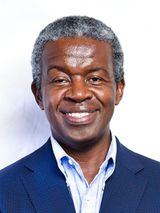
Joseph Nganga is the founder and CEO of AfCEN (Africa Climate and Energy Nexus), the infrastructure-intelligence platform built from Africa for the global energy–AI convergence, and chief operating officer of the 2026 West Africa Integration and Investment Summit. He previously served as Special Envoy for Mission 300 (World Bank / African Development Bank), CEO of the Africa Climate Summit, Vice-President for Africa at the Global Energy Alliance for People and Planet, and Executive Director, Power & Climate Africa at The Rockefeller Foundation. He writes The Nexus Brief on infrastructure finance, sovereign AI, and platform economics at josephnganga.com.