For Investors and DFIs: What the WAIIS Deal Room Actually Means
Most summit deal rooms promise access. Very few are structured to reduce transaction friction. In Freetown, WAIIS is designing a deal room around a simple commercial question: what does it take for investors and DFIs to leave with bankable next steps, not just new contacts?

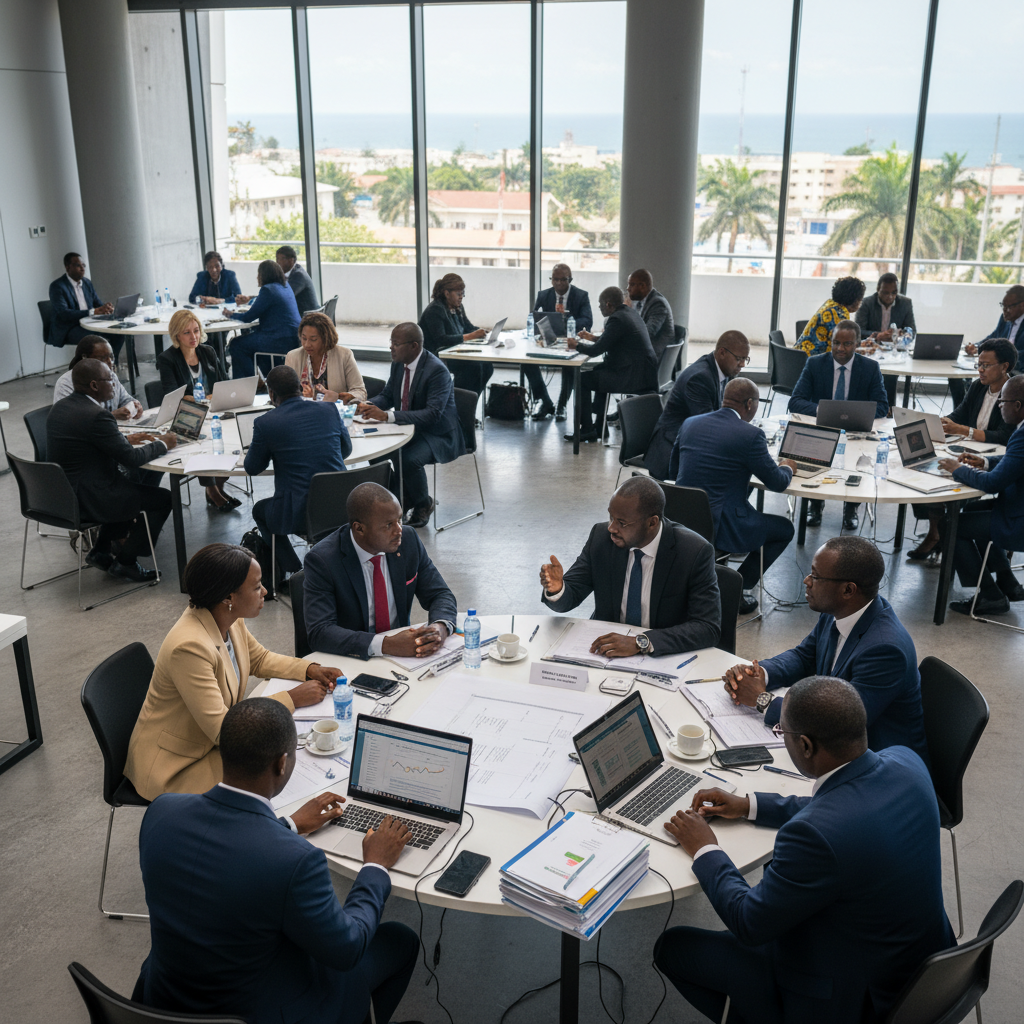
Most summit deal rooms are branding exercises. They offer visibility, panels, introductions, and the familiar language of partnership. What they do not usually offer is transaction architecture. That distinction matters. For investors and development finance institutions, the gap between interest and deployment is rarely a shortage of opportunity. It is a shortage of validated pipeline, decision-ready information, and direct access to the public counterparts who can move a project from concept into execution.
That is the problem the WAIIS Deal Room is built to solve.
In commercial terms, the deal room is not a networking lounge. It is a structured investment interface. Its purpose is to reduce search costs, shorten diligence cycles, and improve the probability that capital providers meet opportunities with enough preparation, documentation, and sovereign engagement to progress beyond exploratory conversation.
The first element is the pipeline itself. Investors do not need more undeveloped ideas. They need a curated set of opportunities that have been screened, prioritised, and positioned against real policy demand. At WAIIS, the deal room is built around a validated investment pipeline drawn from engagement across 15 governments and regional stakeholders. That validation matters because it signals something more than thematic relevance. It indicates that projects entering the room have already passed an initial credibility threshold: they are linked to stated public priorities, grounded in identifiable delivery pathways, and presented with a level of seriousness appropriate for institutional capital.
That does not mean every opportunity is fully de-risked. It means investors are not starting from a cold file. They are entering conversations where the basic questions have already been narrowed: what is the asset or platform, what public need does it answer, what stage is it at, what counterparties are involved, and what form of capital may be relevant.
The second element is 1-on-1 matchmaking. This is where most generic investor events fail. Broad access sounds attractive until every meeting becomes a first meeting with no context. WAIIS is structuring targeted bilateral sessions between investors, DFIs, private operators, and counterparts across 15 governments. That is a different proposition entirely. It means capital can meet the actual decision-makers, implementing agencies, and transaction stakeholders attached to priority opportunities, rather than spending days trying to identify who in the room has the authority, mandate, or technical ownership to carry a deal forward.
For DFIs in particular, this matters because many investable opportunities in West Africa are not purely private-sector transactions. They sit in blended spaces: infrastructure platforms, industrial zones, logistics corridors, energy systems, agribusiness value chains, digital public infrastructure, and public-service delivery models that require state participation somewhere in the structure. Without the right public counterpart in the room, diligence stalls early. With that counterpart present, investors can interrogate risk allocation, implementation readiness, procurement pathways, regulatory constraints, and possible co-financing structures in real time.
The third element is data room access. Serious capital does not move on speeches. It moves on documents. A credible deal room must therefore provide more than introductions; it must provide the information environment that allows institutions to assess whether an opportunity deserves further work. At WAIIS, investors can expect access to deal materials designed to support deeper evaluation: project summaries, strategic context, relevant documentation, and other transaction inputs as made available through the process. In practical terms, that means less time spent chasing basic information after the summit and a better basis for internal investment committee conversations once participants return home.
Just as important is the B2G structure. Business-to-government engagement is often treated as a ceremonial feature of regional summits. Here it is a core part of the architecture. That is because many of the region’s highest-impact opportunities cannot be unlocked through private-to-private conversation alone. They depend on concessions, licences, land frameworks, guarantees, fiscal incentives, enabling regulation, public demand, or cross-border coordination. If those variables are missing from the room, capital remains interested but inactive. A functioning B2G structure allows investors to test not just the asset, but the policy environment around the asset.
In that sense, the WAIIS Deal Room is designed to answer four questions every serious investor asks. Is the pipeline real? Is there a credible counterpart? Is there enough information to begin diligence properly? And is there a route from meeting to mandate?
What, then, should investors and DFIs expect to leave Freetown with?
Not vague optimism. Not a stack of business cards. The practical expectation is a clearer pipeline view, matched meetings with relevant sovereign and commercial counterparts, access to underlying deal information, and a set of next-step pathways specific to each opportunity. For some, that may mean advancing a live transaction into follow-up diligence. For others, it may mean identifying a co-investment partner, opening a government workstream, or shaping a blended finance structure that would not have emerged through desk research alone.
That is the real value proposition. WAIIS is not asking investors to attend another conference about Africa’s potential. It is creating a structured environment in which capital can interrogate pipeline, engage governments directly, and leave with actionable deal momentum. In a region where opportunity is often visible but transaction pathways remain fragmented, that is not a cosmetic feature of the summit. It is one of the main reasons to be in the room.