Pillar III: Feeding West Africa — The Agribusiness Opportunity No One Is Talking About
West Africa’s food challenge is also one of its largest investable markets. From rice to cold chain logistics, the real opportunity is building systems where food sovereignty and commercial returns finally reinforce each other.

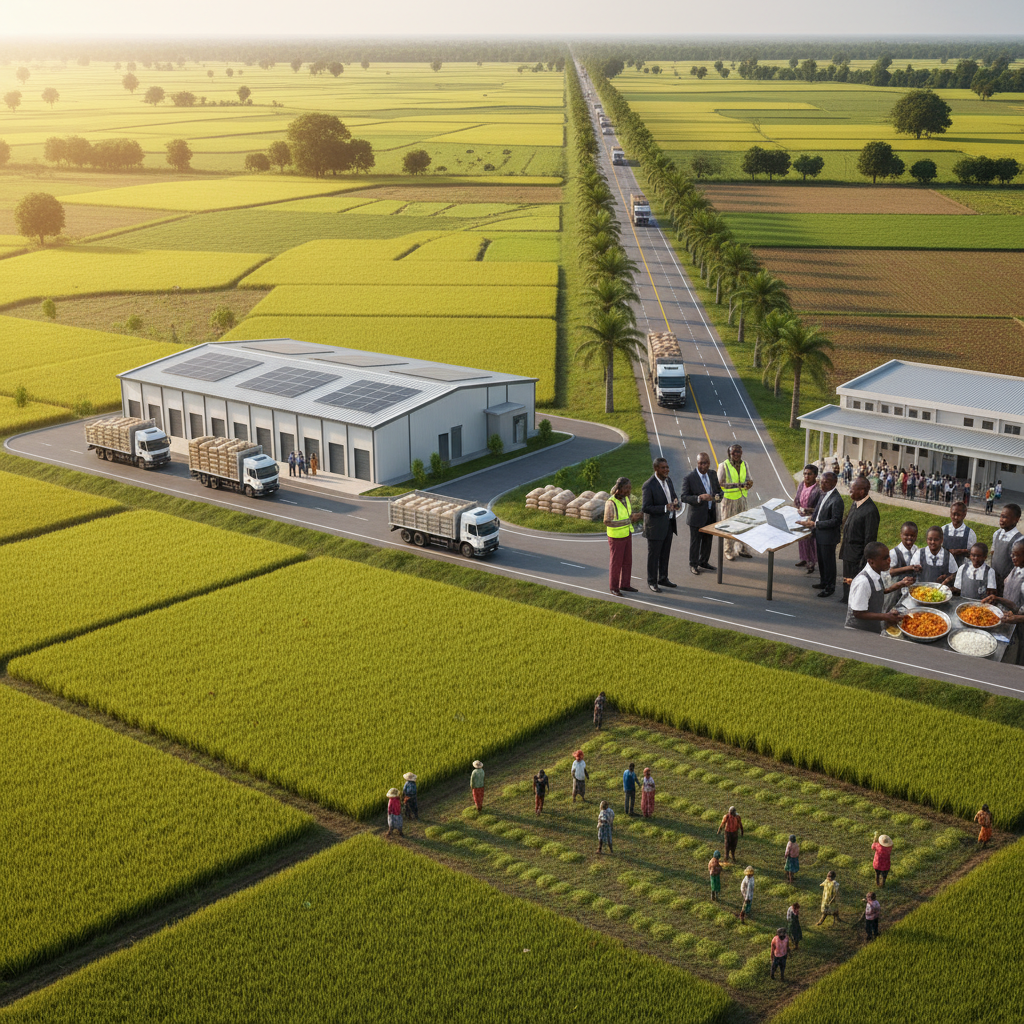
West Africa imports billions of dollars of food it has the land, labour, and market demand to produce. That is not just a food security problem. It is a market design failure.
For too long, the region’s agriculture conversation has been split into two camps: food sovereignty on one side, commercial agribusiness on the other. One framed as social necessity, the other as private-sector ambition. That division is now costly, outdated, and strategically dangerous. In a region of more than 400 million people, rising urbanisation, growing consumer demand, and repeated global supply shocks, the real opportunity is not choosing between the two. It is building the systems that make them work together.
That is the agribusiness case WAIIS is putting on the table in Freetown. Not agriculture as subsistence. Agriculture as infrastructure, logistics, industrial policy, and investable demand. Register now at WAIIS.org.
Start with rice. Rice is one of West Africa’s most politically sensitive and commercially important staples. ECOWAS has long recognised this through regional rice development efforts aimed at reducing dependence on imports and strengthening domestic value chains. The strategic logic is obvious. West Africa consumes enormous volumes of rice every year, yet too much of that demand is still met through external markets, exposing countries to currency pressure, shipping disruption, and price volatility they do not control.
The scale potential is equally obvious. If even a fraction of import demand is captured by competitive regional production, the upside is not limited to farmers. It extends across seed systems, irrigation, mechanisation services, storage, milling, packaging, transport, finance, insurance, and retail distribution. Rice is not just a crop. It is a full-stack agribusiness ecosystem with embedded demand already proven by the market.
But demand alone does not create bankable value chains. Infrastructure does. This is where the opportunity becomes more serious and more urgent.
Cold chain infrastructure remains one of the least discussed and highest-leverage investments in West African agribusiness. Across horticulture, poultry, dairy, fisheries, and perishables distribution, post-harvest losses remain a silent tax on growth. In some markets, a significant share of output never reaches the consumer in saleable condition. That means lower farmer incomes, higher food prices, weaker nutrition outcomes, and reduced confidence from processors and retailers who need consistency.
A functioning cold chain changes the economics of the sector. It extends shelf life. It improves quality assurance. It allows aggregation at scale. It unlocks supermarket and institutional buyers. It widens export potential where standards can be met. Most importantly, it converts waste into revenue. For investors, that is not an abstract development thesis. It is a clear infrastructure play sitting inside a growing consumer market.
The same is true of agricultural corridors. West Africa does not only need more production; it needs coordinated production linked to transport, storage, processing, and end markets. Agricultural corridors are the physical and policy architecture that make this possible. They connect high-potential production zones to ports, cities, industrial parks, and border markets. They reduce fragmentation. They improve logistics efficiency. They create the conditions for clustering processors, input providers, warehousing, and trade finance around real volumes.
When these corridors work, they lower transaction costs across the entire value chain. That is how agribusiness stops being episodic and starts becoming investable. It is also how regional integration becomes tangible. Not as treaty language, but as maize moving faster, tomatoes arriving intact, rice milling locally, and SMEs accessing larger cross-border markets with less friction.
Then there is the demand side many policymakers still underestimate: school feeding programmes.
Too often, school feeding is treated purely as a social intervention. It is that. But it is also one of the most powerful demand engines available to domestic agriculture if designed correctly. Large-scale school feeding creates predictable, recurring procurement demand for rice, grains, legumes, vegetables, poultry, dairy, and processed food products. It can anchor local sourcing. It can support SME aggregators and processors. It can stabilise offtake for smallholder-linked supply chains. And it can turn public spending into a tool for market formation.
That matters because agribusiness scales when producers can see demand ahead of harvest, processors can forecast throughput, and financiers can underwrite contracts against credible buyers. School feeding, when integrated with local production systems, does more than feed children. It creates structured markets.
This is the larger point. Food sovereignty and commercial agribusiness are not in conflict. They are only in conflict when policy is fragmented, logistics are weak, and investment is disconnected from regional priorities. Align them properly, and each strengthens the other. Domestic production reduces external vulnerability. Commercial scale improves efficiency and lowers cost. Public procurement creates demand certainty. Infrastructure reduces loss and expands margins. Regional corridors connect surplus to deficit markets. That is not theory. That is framework.
And frameworks matter because West Africa does not need another cycle of speeches about agricultural potential. It needs execution architecture: investors who understand where returns sit, governments prepared to de-risk core bottlenecks, SMEs that can plug into larger value chains, and development finance aligned around commercially viable food systems.
That is why this conversation belongs at WAIIS. The summit is where the agribusiness pillar moves from aspiration to structure: rice strategy, cold chain investment, corridor development, and institutional demand mechanisms such as school feeding, all examined through the lens that matters most now — how to build a food system that is sovereign, scalable, and investable at the same time. Join the room where that alignment is being built. Secure your seat at WAIIS.org.
West Africa will either continue importing vulnerability or start financing resilience through its own agribusiness systems. That choice is now commercial, political, and urgent. WAIIS, 28-30 April 2026 in Freetown, is where the region’s public and private decision-makers meet to turn that choice into investable action. Seats are limited. Register today at https://waiis.org